King of Ravens by Clare Sager | Book Review
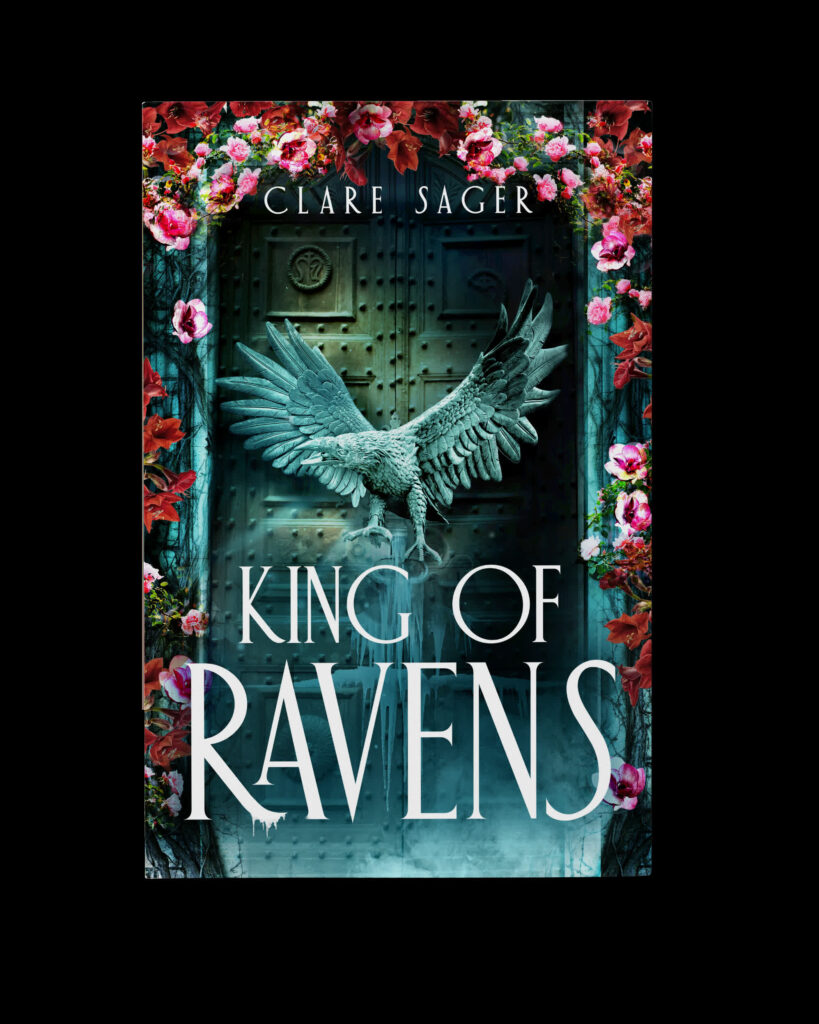
Rhiannon has been sick for sixteen years with something no doctor has ever named, kept behind an iron-warded wall her whole life. Then a fae King of the Dead invades her home to collect on a bargain her father made before she was born, and she goes with him willingly so her family doesn't get destroyed for her sake. What waits for her in the Underworld is a cruel court, a labyrinth nobody's ever beaten, and the slow, dangerous work of figuring out if this king is actually worth trusting.
Plot Summary (spoiler-free)
Rhiannon, Annon to her family, has been sick for sixteen years with something no doctor has ever named, kept behind an iron-warded wall her whole life. Then a fae king shows up to collect on a bargain her father made before she was born, and she goes with him willingly so her family doesn’t get destroyed for her sake. I expected a fairly standard captive-bride setup and got more than that: a cruel court, a labyrinth nobody’s ever beaten, and the slow work of figuring out if this king is actually worth trusting.
The labyrinth ends up being the real engine of the book’s plot, six distinct levels, each with its own rules and its own way of trying to kill her, and it gives the middle of the story a clear shape instead of just wandering between court intrigue scenes. It also does double duty as a kind of endurance test for who Annon actually is under pressure, not just physically, but in what she’s willing to trust and what she isn’t. Alongside that, she makes real friends inside a place that isn’t built for friendship, finds a magic of her own that she has to actually learn to use rather than just discovering it fully formed, and by the end learns something about her own family that changes how the whole first half reads in hindsight. It’s the first half of a story and it plays fair about that. Nothing gets resolved by the last page, and I appreciated that it didn’t pretend otherwise just to give readers a falsely tidy stopping point.
Character Development
What got me about Annon isn’t her stubbornness, though she’s plenty stubborn. It’s how exhausting it must be to perform cheerful all the time so nobody else has to sit with her pain, and the book actually shows that cost instead of just saying it’s there. Her growth isn’t a straight line from weak to strong. She slowly figures out that hiding her real feelings has been its own kind of cage, one she built long before anyone locked her in a real one. There’s a big reveal about her family later on that changes how you read everything before it, without going overboard, and the anger she finally lets herself feel is really the emotional core of the book. I was angrier on her behalf than I expected to be. What sells it is that the book lets her stay angry for a while instead of resolving it in one cathartic scene, it’s messy and it lingers, which is a lot closer to how actually processing a betrayal like that would feel.
Drystan works as a morally grey love interest because his cruelty is specific, not just there for shock. Early on he cuts out someone’s tongue over a small insult and never apologizes for it. But you find out it comes from centuries of his own family using love as a weapon, and that context matters. It doesn’t excuse him, and I appreciated that the book never asks you to pretend it does, it just makes the cruelty make sense as a coping mechanism instead of a personality trait pasted on for edge. The push and pull between his need to control everything and the fact that he can’t treat Annon as disposable anymore is basically the whole romance, and a piece of his backstory, someone he loved and lost, explains a lot about why he keeps sabotaging the closeness he actually wants. Watching him catch himself doing it, and sometimes fail to stop, made him feel like an actual person underneath the fae-king posturing, rather than a collection of brooding-love-interest traits stitched together and set loose on the page.
The Collector is the best thing in this book, honestly. This creature made of a bunch of merged, half-remembered souls could’ve just been a spooky gimmick. It isn’t. Watching it go from feared monster to Annon’s most loyal friend got me more than anything else in the whole story, and it works because Annon treats it like a person from the first time they talk, way before the plot needs that to pay off. There’s a real tenderness to how the book handles a creature everyone else in the court has decided isn’t worth being afraid of caring about, and Annon extending it basic kindness ends up meaning more, structurally, than almost anything Drystan does for her. Min, Astrid, Kishel, and Threnn all get real moments too, but none of them hit me the way the Collector did.
Themes
At its core this is about the difference between being cared for and being controlled. More than one person close to Annon makes a big decision about her body or her life without asking her first, all convinced they know best. Every time it happens, her anger is real, and the book keeps saying good intentions don’t make it okay to take away someone’s choice. That gives it more backbone than a lot of romantasy with the same setup, and it’s consistent, it doesn’t just apply that standard to the villains and give the love interest a pass.
Alongside that there’s a real look at performed strength. This court treats any sign of weakness as an invitation to be cruel, and Annon’s habit of smiling through everything is the same defense mechanism, just aimed at a gentler audience. Both versions of that performance get treated as the same coping tool wearing different clothes, which is a sharper observation than I expected going in.
There’s also something genuinely touching about found family here, whether that’s the Collector finally being treated like a person or Min finally being valued for more than what she’s useful for. What makes it land instead of feeling like a checklist is that nobody in this found family is safe from Annon’s anger either. She holds the people who actually care about her to the same standard she holds everyone else to, and that keeps the “found family” thread from turning saccharine.
Writing Style and Effectiveness
Annon’s first-person, present-tense voice carries a lot of sensory detail: how bitter half a tablet tastes, how joints feel when they’ve forgotten how to move easily. It works. Her illness and how it slowly changes in the Underworld feel real, not just plotted in, there’s a real physical logic to when she’s strong and when she isn’t, instead of her symptoms just conveniently vanishing whenever the plot needs her mobile.
The labyrinth, six levels each with its own trial, keeps the middle of the book moving, though a couple of the trials, especially the ones that are just wandering corridors, go on too long. I’ll be honest, I started skimming a bit around the second level. The trials that work best are the ones that force Annon to use her own growing magic instead of just running, and those sections are genuinely tense in a way the corridor-wandering ones aren’t.
The back-and-forth between Annon and Drystan is sharp and earns the enemies-to-lovers thing before it gets physical, and once it does, those scenes are detailed enough to actually mean something instead of just filling space. One real complaint: his dimples get mentioned so often I started counting around chapter thirty, and by the second half a few repeated images, the dimples, the ravens, gray versus color standing in for life and death, start to feel like a checklist instead of an actual motif. A tighter edit in the back third would’ve caught most of these without losing any of the atmosphere they’re clearly going for.
Conclusion
King of Ravens takes a familiar setup, woman bargained off to a dark fae king, and still manages to stand out. What makes it work is how specific everything gets: a heroine whose illness and habit of erasing herself are actually the point, not just scenery for the romance. It’s sitting on a crowded shelf of Hades-and-Persephone romantasy right now, and I’d put it above most of them because the stakes are about what’s happening to Annon, not just around her.
The labyrinth section drags in the middle and the same handful of images get overused by the end, and those are real, fixable problems, not just nitpicks. Even so, the character work, especially Annon, Drystan, and the Collector, is genuinely good, and the ending lands its cliffhanger hard. I closed the last page annoyed I didn’t have the second book already sitting in front of me, and I wanted the next one immediately, which says something for a story built on this many familiar pieces.
Evaluation
Overall Rating: ★★★★☆ (4/5)
Writing Style: ★★★☆☆ (3/5): sharp dialogue and a genuinely immersive labyrinth structure, undercut by a handful of recurring images that wear thin well before the ending
Characters: ★★★★☆ (4/5): a heroine with a real, earned arc, a morally grey king whose cruelty has specific roots rather than existing for shock value, and a side cast (Min, Astrid, the Collector) who each get a genuine arc of their own
World-Building: ★★★★☆ (4/5): a richly sensory, distinctly cruel unseelie court and a labyrinth with real escalating stakes, though the wider politics between the six Underworld kingdoms stay mostly gestured at rather than fully explored in this first book
Spice Rating: ★★★★☆ (4/5): frequent and fairly explicit once the romance turns physical, with several extended scenes
Recommended for readers who loved the Hades and Persephone bones of Carissa Broadbent or the slow-burn court politics of LJ Andrews, and who want a romantasy heroine with a real interior life instead of just one-liners. It’s a strong entry point into this particular corner of the genre even with how crowded that shelf already is. Not the right pick if you want prose that stays fresh the whole way through, or a book that actually wraps anything up by the last page.
Trigger warnings: death, violence, blood and murder; prejudice and discrimination; trauma related to medical experiences, including fear of death, medication side effects, medication shortage, and harmful behavior from loved ones; ableism; a morally complex, villainous love interest; explicit sexual content.