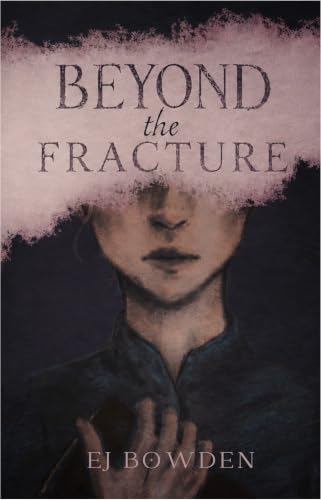
Beyond the Fracture by EJ Bowden | Book Review
Plot Summary (spoiler-free) Maia Colwyn leaves her coastal village to work as a scribe in Eryssan, a city built almost in the shadow of the Fracture, a centuries-old tear in the world that occasionally spits out monsters and is held shut by the Umbralyn: tall, glass-veined, near-immortal beings sworn by an old vow to guard humanity from whatever’s on the other side. Maia’s actually useful there, for once in her life. She’s one of the only scribes who can read the dead languages carved into fragments pulled fresh off the Fracture’s edge, and that skill puts her in a room, day after day, with Caelith, a Guardian assigned to help translate what the fragments say. What starts as two people circling a shared problem turns into something neither of them is supposed to want, not with the history between their two kinds, and not with how much both of them have to lose if anyone notices. And people do notice. As the tremors get worse and the city gets more frightened, Maia starts asking questions nobody in a position of power wants asked: what the Umbralyn actually get out of centuries of servitude, what’s happening in the tunnels under the city that the official channels won’t explain, and why Caelith keeps knowing things before he has any business knowing them. It’s a book about a woman who can’t leave a locked door alone, dropped into a city that’s spent generations agreeing not to ask what’s behind several of its own. I won’t get into how the central relationship or the Fracture itself resolves, but I’ll say the ending doesn’t hand you a tidy happily-ever-after. It’s quieter and sadder than that, with just enough of a thread of hope left dangling that you’re not entirely sure whether to grieve or wait. Character Development Maia’s the easiest character to like immediately and the hardest to get tired of, because she has an actual flaw instead of just spunk: she cannot leave a mystery alone, even when leaving it alone is clearly the smarter move. It gets her hurt more than once, and I appreciated that her curiosity never gets treated as a virtue dressed up as a character trait. It’s a compulsion, one she inherited from her father and never really examined, and it costs her. Her arc isn’t really about becoming braver. She starts brave. It’s about learning what she’s actually willing to risk for a truth that isn’t hers to have. Caelith is where the book does its best work, and also where it takes the longest to get there. For a big chunk of the middle he’s frustratingly opaque, all clipped non-answers and vanishing acts, which is clearly deliberate but does wear thin before it pays off. When it pays off, though, it really pays off. The two flashback chapters that show his actual history, not the polished version he’s spent centuries performing, makes you rethink every cold, careful thing he’s done up to that point, and I found myself rereading a few of his earlier scenes afterward with completely different eyes. He’s a man who built a second self entirely out of grief and then discovered, against every plan he’d made, that he didn’t actually want to be that person anymore. That’s good bones for a romantic lead, and the book earns it. Julen gets more space than most side characters in this kind of book, and he deserves it. He starts off as exactly the kind of skeptical, inherited-prejudice friend-with-feelings you expect, and the book actually lets him grow past that instead of leaving him stuck as comic relief who occasionally says something bigoted for tension. His loyalty to Maia, even after he’s watched her fall for the exact thing his father raised him to fear, is one of the things that actually got to me by the end. I liked him a lot more by the end than I expected to at the start. Selinne and Master Orell get less room, and it shows. Selinne’s warm and sharp, but she keeps vanishing to do off-page things the plot needs handled, and she deserved more of the back half than she got. Orell starts as a genuinely complicated authority figure, someone whose fear of the Umbralyn comes from somewhere real, and he loses that nuance faster than his early scenes earned. Safir never really gets there either. He’s fine as a foil. He’s not a person, just a mouthpiece for the argument Caelith’s already rejected. The power dynamics get real attention here, which I wasn’t expecting. The way the Umbralyn use the word “claimed,” the way decisions about Maia keep getting made by people who never once ask her permission, the way Orell’s whole philosophy boils down to deciding what’s best for people who never got a vote: the book is consistently interested in who gets to choose, and who gets chosen for. That’s not dressed up as subtext. It’s the actual argument running under the plot. Themes The clearest theme here is the difference between fear dressed up as protection and protection that’s actually earned, and the book plays that out on every level, not just the romance. Eryssan’s whole relationship with the Umbralyn is built on that exact confusion, a species kept in chains and called partners, and the book is smart enough to let both things be true at once instead of picking a side and flattening the argument. Grief turning hard is the other big one, and it’s handled with more nuance than I expected going in. Caelith’s coldness doesn’t come from nowhere, and the book doesn’t ask you to excuse everything it makes him do. It just asks you to understand how a person gets there, which is harder to pull off than making him a monster you’re allowed to hate. There’s also a real interest in memory versus the official record. Records can be erased, rewritten, or simply stopped, the book points out more than once, but memory, the actual felt kind, can’t be edited after the fact the same way. The memory-stone device is a little on the nose as a metaphor, but it works, because the book has already spent so much time showing how easily the truth in Eryssan gets managed by whoever’s currently in charge of telling it. Writing Style and Effectiveness The close third-person mostly rides on Maia’s shoulder, in past tense, and it’s at its best in the sensory writing: the glass creeping through stone, the wrongness of a Hollow Wraith’s joints folding the wrong way, the particular chime of snow hitting a fractured cliff face. It’s genuinely atmospheric. Those are the moments the book earns its mood honestly, and there are a lot of them. I’m less sold on the pacing through the middle third. There’s a stretch where Maia gets reassigned, watches Caelith from a distance, gets reassigned again, and has roughly the same internal argument with herself about whether to trust him three or four times in a row, and I found my attention drifting during those chapters in a way it never did during the actual set pieces. The two chapters that switch into Caelith’s own head are the strongest structural choice in the book, and I wish there’d been more of them earlier, since they do more to establish who he actually is than a hundred pages of Maia guessing at him. The prose itself needed another editing pass before it went out. I hit real, repeated typos and dropped or doubled words throughout the read, the kind that pull you straight out of a tense scene, and a handful of sentences tangle themselves up mid-thought. None of it sinks the book, but it happens often enough that I’d tell them to fix it before this goes out to more readers. Conclusion Beyond the Fracture has a genuinely good idea at its center: a species bound by an old bargain nobody alive actually remembers negotiating, a rift in the world that behaves less like a monster factory and more like a wound with a memory of its own, and a slow-burn romance that earns its weight because both people in it have real, structural reasons to stay apart. That’s more ambition than a lot of books in this genre bother with. It lands hard when it lands, especially in Caelith’s back half. What holds it back isn’t the idea, it’s the execution in a few places. The pacing sags exactly where you need momentum most, a couple of side characters get shortchanged by a plot that mostly just needed them for utility, and the prose could’ve used one more pass before it went out. It reminded me of Naomi Novik’s Uprooted, a being bound to guard against something ancient, a human who refuses to be handled by the systems around her, though this one pushes much harder into romance and political rebellion than Novik ever does. I closed it wistful. Not sad exactly, just quietly unsettled in a way that felt right for how the ending actually lands. If you’re already deep in the current wave of romantasy where a grumpy immortal falls for the one human who won’t stop asking questions, this scratches that itch while doing something more interesting with the politics underneath it than most books in the lane bother to. Evaluation Overall Rating: ★★★☆☆ (3/5) Writing Style: ★★☆☆☆ (2/5): strong sensory set pieces undercut by a saggy middle third and prose that needed another editing pass Characters: ★★★☆☆ (3/5): Maia and Caelith both earn real arcs, Julen is a genuine standout among the side cast, but Selinne, Orell, and Safir all get less than they deserved World-Building: ★★★★☆ (4/5): the Umbralyn, the Fracture’s glass-born creatures, and the political tangle between Eryssan and Meridon are inventive and atmospheric, the strongest part of the book Spice Rating: ★★★☆☆ (3/5): one explicit, fairly detailed love scene plus a lot of charged near-misses building to it, not frequent enough to push higher Recommended for readers who want their romantasy with real political teeth under the swoon: fans of Naomi Novik’s bound-guardian setups, or anyone who likes a slow burn between a curious human and a centuries-old immortal who’s clearly hiding more than his silence lets on. It’s a better fit for readers who don’t need a fully resolved happy ending than for ones who do, and it’s worth going in patient with the middle third, because the payoff in the back half is worth the wait. Trigger warnings: on-page death, graphic violence and injury, torture and forced imprisonment, non-consensual medical-style testing and experimentation, war and mass-casualty themes, xenophobia and mob violence, predatory and intimidating behavior toward a female character (non-graphic), grief and loss of a sibling, manipulation by authority figures, and one explicit sexual content scene.
Plot Summary (spoiler-free)
Maia Colwyn leaves her coastal village to work as a scribe in Eryssan, a city built almost in the shadow of the Fracture, a centuries-old tear in the world that occasionally spits out monsters and is held shut by the Umbralyn: tall, glass-veined, near-immortal beings sworn by an old vow to guard humanity from whatever’s on the other side. Maia’s actually useful there, for once in her life. She’s one of the only scribes who can read the dead languages carved into fragments pulled fresh off the Fracture’s edge, and that skill puts her in a room, day after day, with Caelith, a Guardian assigned to help translate what the fragments say.
What starts as two people circling a shared problem turns into something neither of them is supposed to want, not with the history between their two kinds, and not with how much both of them have to lose if anyone notices. And people do notice. As the tremors get worse and the city gets more frightened, Maia starts asking questions nobody in a position of power wants asked: what the Umbralyn actually get out of centuries of servitude, what’s happening in the tunnels under the city that the official channels won’t explain, and why Caelith keeps knowing things before he has any business knowing them.
It’s a book about a woman who can’t leave a locked door alone, dropped into a city that’s spent generations agreeing not to ask what’s behind several of its own. I won’t get into how the central relationship or the Fracture itself resolves, but I’ll say the ending doesn’t hand you a tidy happily-ever-after. It’s quieter and sadder than that, with just enough of a thread of hope left dangling that you’re not entirely sure whether to grieve or wait.
Character Development
Maia’s the easiest character to like immediately and the hardest to get tired of, because she has an actual flaw instead of just spunk: she cannot leave a mystery alone, even when leaving it alone is clearly the smarter move. It gets her hurt more than once, and I appreciated that her curiosity never gets treated as a virtue dressed up as a character trait. It’s a compulsion, one she inherited from her father and never really examined, and it costs her. Her arc isn’t really about becoming braver. She starts brave. It’s about learning what she’s actually willing to risk for a truth that isn’t hers to have.
Caelith is where the book does its best work, and also where it takes the longest to get there. For a big chunk of the middle he’s frustratingly opaque, all clipped non-answers and vanishing acts, which is clearly deliberate but does wear thin before it pays off. When it pays off, though, it really pays off. The two flashback chapters that show his actual history, not the polished version he’s spent centuries performing, makes you rethink every cold, careful thing he’s done up to that point, and I found myself rereading a few of his earlier scenes afterward with completely different eyes. He’s a man who built a second self entirely out of grief and then discovered, against every plan he’d made, that he didn’t actually want to be that person anymore. That’s good bones for a romantic lead, and the book earns it.
Julen gets more space than most side characters in this kind of book, and he deserves it. He starts off as exactly the kind of skeptical, inherited-prejudice friend-with-feelings you expect, and the book actually lets him grow past that instead of leaving him stuck as comic relief who occasionally says something bigoted for tension. His loyalty to Maia, even after he’s watched her fall for the exact thing his father raised him to fear, is one of the things that actually got to me by the end. I liked him a lot more by the end than I expected to at the start.
Selinne and Master Orell get less room, and it shows. Selinne’s warm and sharp, but she keeps vanishing to do off-page things the plot needs handled, and she deserved more of the back half than she got. Orell starts as a genuinely complicated authority figure, someone whose fear of the Umbralyn comes from somewhere real, and he loses that nuance faster than his early scenes earned. Safir never really gets there either. He’s fine as a foil. He’s not a person, just a mouthpiece for the argument Caelith’s already rejected.
The power dynamics get real attention here, which I wasn’t expecting. The way the Umbralyn use the word “claimed,” the way decisions about Maia keep getting made by people who never once ask her permission, the way Orell’s whole philosophy boils down to deciding what’s best for people who never got a vote: the book is consistently interested in who gets to choose, and who gets chosen for. That’s not dressed up as subtext. It’s the actual argument running under the plot.
Themes
The clearest theme here is the difference between fear dressed up as protection and protection that’s actually earned, and the book plays that out on every level, not just the romance. Eryssan’s whole relationship with the Umbralyn is built on that exact confusion, a species kept in chains and called partners, and the book is smart enough to let both things be true at once instead of picking a side and flattening the argument.
Grief turning hard is the other big one, and it’s handled with more nuance than I expected going in. Caelith’s coldness doesn’t come from nowhere, and the book doesn’t ask you to excuse everything it makes him do. It just asks you to understand how a person gets there, which is harder to pull off than making him a monster you’re allowed to hate.
There’s also a real interest in memory versus the official record. Records can be erased, rewritten, or simply stopped, the book points out more than once, but memory, the actual felt kind, can’t be edited after the fact the same way. The memory-stone device is a little on the nose as a metaphor, but it works, because the book has already spent so much time showing how easily the truth in Eryssan gets managed by whoever’s currently in charge of telling it.
Writing Style and Effectiveness
The close third-person mostly rides on Maia’s shoulder, in past tense, and it’s at its best in the sensory writing: the glass creeping through stone, the wrongness of a Hollow Wraith’s joints folding the wrong way, the particular chime of snow hitting a fractured cliff face. It’s genuinely atmospheric. Those are the moments the book earns its mood honestly, and there are a lot of them.
I’m less sold on the pacing through the middle third. There’s a stretch where Maia gets reassigned, watches Caelith from a distance, gets reassigned again, and has roughly the same internal argument with herself about whether to trust him three or four times in a row, and I found my attention drifting during those chapters in a way it never did during the actual set pieces. The two chapters that switch into Caelith’s own head are the strongest structural choice in the book, and I wish there’d been more of them earlier, since they do more to establish who he actually is than a hundred pages of Maia guessing at him.
The prose itself needed another editing pass before it went out. I hit real, repeated typos and dropped or doubled words throughout the read, the kind that pull you straight out of a tense scene, and a handful of sentences tangle themselves up mid-thought. None of it sinks the book, but it happens often enough that I’d tell them to fix it before this goes out to more readers.
Conclusion
Beyond the Fracture has a genuinely good idea at its center: a species bound by an old bargain nobody alive actually remembers negotiating, a rift in the world that behaves less like a monster factory and more like a wound with a memory of its own, and a slow-burn romance that earns its weight because both people in it have real, structural reasons to stay apart. That’s more ambition than a lot of books in this genre bother with. It lands hard when it lands, especially in Caelith’s back half.
What holds it back isn’t the idea, it’s the execution in a few places. The pacing sags exactly where you need momentum most, a couple of side characters get shortchanged by a plot that mostly just needed them for utility, and the prose could’ve used one more pass before it went out. It reminded me of Naomi Novik’s Uprooted, a being bound to guard against something ancient, a human who refuses to be handled by the systems around her, though this one pushes much harder into romance and political rebellion than Novik ever does. I closed it wistful. Not sad exactly, just quietly unsettled in a way that felt right for how the ending actually lands. If you’re already deep in the current wave of romantasy where a grumpy immortal falls for the one human who won’t stop asking questions, this scratches that itch while doing something more interesting with the politics underneath it than most books in the lane bother to.
Evaluation
Overall Rating: ★★★☆☆ (3/5)
Writing Style: ★★☆☆☆ (2/5): strong sensory set pieces undercut by a saggy middle third and prose that needed another editing pass
Characters: ★★★☆☆ (3/5): Maia and Caelith both earn real arcs, Julen is a genuine standout among the side cast, but Selinne, Orell, and Safir all get less than they deserved
World-Building: ★★★★☆ (4/5): the Umbralyn, the Fracture’s glass-born creatures, and the political tangle between Eryssan and Meridon are inventive and atmospheric, the strongest part of the book
Spice Rating: ★★★☆☆ (3/5): one explicit, fairly detailed love scene plus a lot of charged near-misses building to it, not frequent enough to push higher
Recommended for readers who want their romantasy with real political teeth under the swoon: fans of Naomi Novik’s bound-guardian setups, or anyone who likes a slow burn between a curious human and a centuries-old immortal who’s clearly hiding more than his silence lets on. It’s a better fit for readers who don’t need a fully resolved happy ending than for ones who do, and it’s worth going in patient with the middle third, because the payoff in the back half is worth the wait.
Trigger warnings: on-page death, graphic violence and injury, torture and forced imprisonment, non-consensual medical-style testing and experimentation, war and mass-casualty themes, xenophobia and mob violence, predatory and intimidating behavior toward a female character (non-graphic), grief and loss of a sibling, manipulation by authority figures, and one explicit sexual content scene.