Blood of Desiderium by Ali Stuebbe | Book Review
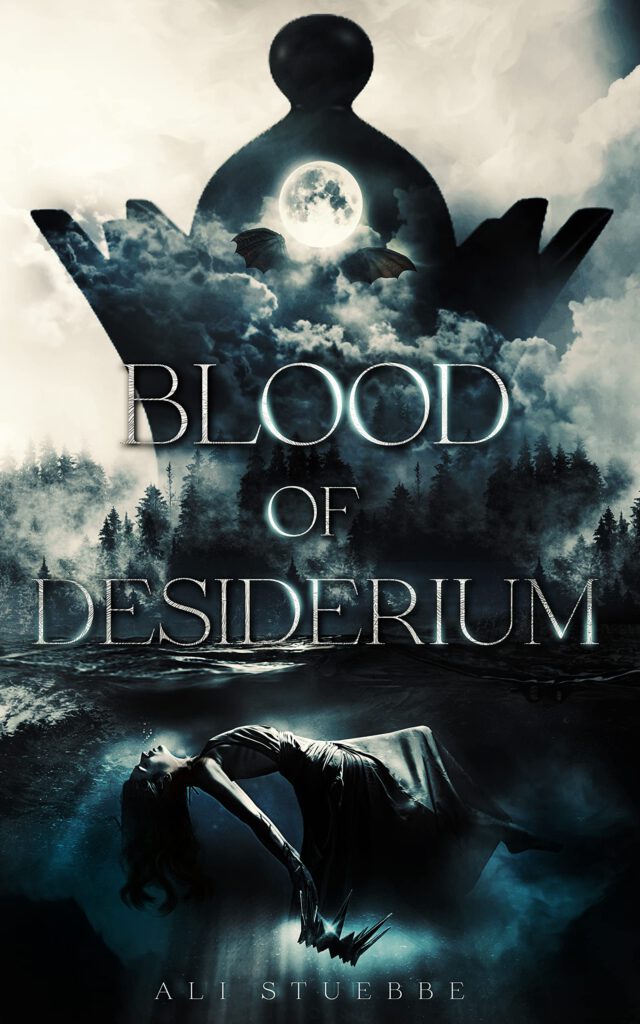
In the lands of Deyadrum, where every Fae possesses power, Princess Emma is the only one forced without. Confined within her palace by her father, she is desperate for a taste of freedom, until she discovers that everything she thought she knew was a lie, and that something evil plagues her lands, promising death and darkness. A betrothal that tests her, a mysterious vigilante who teases her, a Dark Prince who does not trust her, and a phantom that invades her dreams. Emma must escape her father's grip as she journeys to find a way to save her people, and herself, before the darkness that lurks within consumes her.
Plot Summary (spoiler-free)
In the lands of Deyadrum, every Fae is born with power. Princess Emma is the exception, the only one forced to grow up without it, kept behind her palace walls by her father and starving for anything that resembles freedom. Then she learns that most of what she was raised to believe is a lie, and that something is moving through her lands that means her people real harm.
From there the book runs on court politics and the pull of several men who each want something different from her: a betrothal she did not choose, a masked vigilante who needles her, a Dark Prince who does not trust her, and a phantom that turns up in her dreams. Emma has secrets of her own and a game she is trying to play, and the story is about whether she can get clear of her father’s grip in time to do anything about the darkness closing in.
Character Development
Emma is the book’s strongest element. She is not a passive prisoner. The upbringing that caged her also gave her a low tolerance for injustice and a willingness to fight, and the book is honest that a childhood like hers leaves marks. Her arc is a coming-of-age under the worst possible conditions: new powers, fresh grief, and a set of choices about what to do with both. What the book gives you is a heroine with a clear spine and a real wound, working out who she is going to be while everyone around her tries to decide it for her.
The men in her orbit are drawn in less depth. The betrothed, the vigilante, and the Dark Prince each represent a different kind of pressure on Emma more than they read as fully rounded people in this first book, which is a common shape for a series opener with a large cast to introduce.
Themes
The book keeps returning to confinement and to the lies that hold it in place. Emma is caged physically by her father and caged further by a version of her own history that was built to keep her compliant. The story is about her pulling that version apart, thread by thread, and deciding what she owes a kingdom that lied to her. Grief runs alongside it, since Emma is carrying loss she has not been allowed to process, and the book ties her ability to act to her ability to face it.
Writing Style and Effectiveness
The world comes through as full without being overwhelming. Stuebbe gives you enough magic, politics, and menace to feel the shape of the Fae realm without stopping the story to catalogue it, which is a harder balance than it sounds and one the book mostly gets right. The plotting keeps a steady pace through most of its length, with genuine twists rather than telegraphed ones. The weak stretch is the middle, where the pacing goes uneven and the book takes a while to line its pieces back up before the final act.
Conclusion
Blood of Desiderium is a solid dark fantasy opener carried by its heroine. Emma is specific and sympathetic, the world is built with a light enough touch to stay readable, and the central mystery has real momentum. It is held back by a saggy middle and by a set of love interests who are still mostly functions rather than people at this stage. This is very much book one, and it ends with the larger story wide open. Against other Fae-court fantasy romance, it distinguishes itself by making its princess powerless in a world defined by power, and by taking her grief as seriously as its intrigue.
Evaluation
- Overall Rating: ★★★★☆ (4/5)
- Writing Style: ★★★★☆ (4/5): controlled world-building and real twists, let down by an uneven middle
- Characters: ★★★☆☆ (3/5): Emma is well-drawn; the love interests are still archetypes in book one
- World-Building: ★★★★☆ (4/5): a full, legible Fae realm delivered without info-dumping
- Spice Rating: ★★☆☆☆ (2/5): forbidden-lust tension and some on-page heat, not frequent or highly explicit
Recommended for readers who like Fae-court fantasy with political intrigue, a powerless heroine in a world that runs on power, and a slow-building set of romantic threads rather than a single love story. Good fit for readers who want their court intrigue tied to real grief. Readers who need every book in a series to resolve on its own should know this one ends with the main story still open.