The Useless Witch by Savannah Lee | Book Review
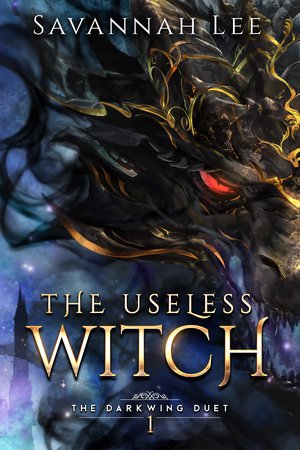
Saoirse is a young woman with no magic in a world where that is close to blasphemy. She works in a bakery, trying to break free of her abusive father, King Erwin, and to survive the relentless torment of Jephyr, one of the cruellest members of the Sol guard. Her push toward reclaiming her own life runs alongside her growing bond with Vane, a brooding, protective man carrying a past as dark as hers. As the psychological damage of her childhood slowly comes apart on the page, the tension and the romance build while the two of them fight their own demons, family betrayals, and dangerous missions to protect the people they love.
Plot Summary (spoiler-free)
Saoirse is a young woman with no magic in a world where that is close to blasphemy. She works in a bakery, trying to get out from under her abusive father, King Erwin, and to survive the ongoing torment of Jephyr, one of the cruellest members of the Sol guard. Her push toward reclaiming her own life runs alongside her growing bond with Vane, a brooding, protective man carrying a past as dark as hers.
As the book goes on, the psychological damage of Saoirse’s childhood slowly comes apart on the page, and her determination to break free of her father’s grip hardens. The tension and the romance build through her connection with Vane as the two of them fight their own demons, family betrayals, and dangerous missions to protect the people they love.
Character Development
Saoirse is complex and deeply scarred by her father’s cruelty, and the core of the book is her internal negotiation between feeling worthless, feeling afraid, and finally feeling powerful. Her struggles with anxiety, depression, and self-harm are written raw and close, and her relationships, especially with Vane, are both comforting and tense, tracking her slow emotional growth.
Vane is, like Saoirse, a shadow of himself after his own trauma. His drive to protect her runs on love and guilt at once, and while he is fiercely determined to shield her from harm, his own turmoil sometimes gets in the way of actually connecting with her. Jephyr is a noxious embodiment of toxic power in Saoirse’s life, and his escalating predatory behaviour keeps the threat, emotional and physical, in the room. Xanthi, Saoirse’s sister, is a pointed contrast: everything Saoirse was never allowed to have, strength, power, recognition, and their relationship, though less developed than others, adds a layer to Saoirse’s sense of being overshadowed.
Themes
Power imbalance is handled with real care here. The relationships are not just love or friendship, they are also arrangements of control, fear, and survival, most sharply in how Saoirse speaks to and moves around her father and Jephyr. Her lack of power in a world where power is everything puts her permanently at odds with her surroundings, and the abuse she takes, physical and psychological both, is folded into a wider picture of oppression. Survival is the book’s real subject: the emotional scars are heavy and the road back is long, and the self-harm and abuse are genuinely hard to read, but they carry the theme rather than decorate it. The Saoirse and Vane romance sits inside all of that as a picture of love offering two broken people a kind of redemption.
Writing Style and Effectiveness
Savannah Lee writes with a vivid, raw emotional charge, and she is good at building character-driven moments that put the reader in the emotional centre of a scene. The language and the atmosphere are dark and heavy, matching the conditions the characters live under, and the figurative writing works to externalise their inner states. The pacing is well managed, moving between action and reflective, psychology-heavy stretches, and the point of view shifts between Saoirse and Vane give a rounded view of both.
Conclusion
The Useless Witch is a strong story about survival, trauma, and the search for self-worth in a world that runs on power. Lee handles the darker material with a haunting but heartfelt depth that makes it a real recommendation for readers who want character-driven fantasy built around emotional resilience. The world-building, especially the magic system, feels a little underdeveloped, but the depth of the character arcs more than makes up for it. It has thematic overlap with A Court of Thorns and Roses, taken somewhere darker and more introspective.
Evaluation
- Overall Rating: ★★★★☆ (4/5)
- Writing Style: ★★★★☆ (4/5)
- Characters: ★★★★★ (5/5)
- World-Building: ★★★☆☆ (3/5): the magic system in particular is thin.
- Spice Rating: ★★★☆☆ (3/5): on-page intimacy that supports the romance, not the book’s focus.
Trigger warnings: physical and psychological child abuse, an abusive parent, self-harm, depression and anxiety, predatory and threatening behaviour, a heavy power imbalance, trauma.
Recommendation: for readers who want character-driven dark fantasy with a strong emotional core, an honest treatment of trauma and recovery, and a romance about two damaged people finding their way to each other. Fans of Sarah J. Maas who want something darker and more interior, and who can handle the on-page self-harm and abuse.