Declan by Joan Morven | Book Review
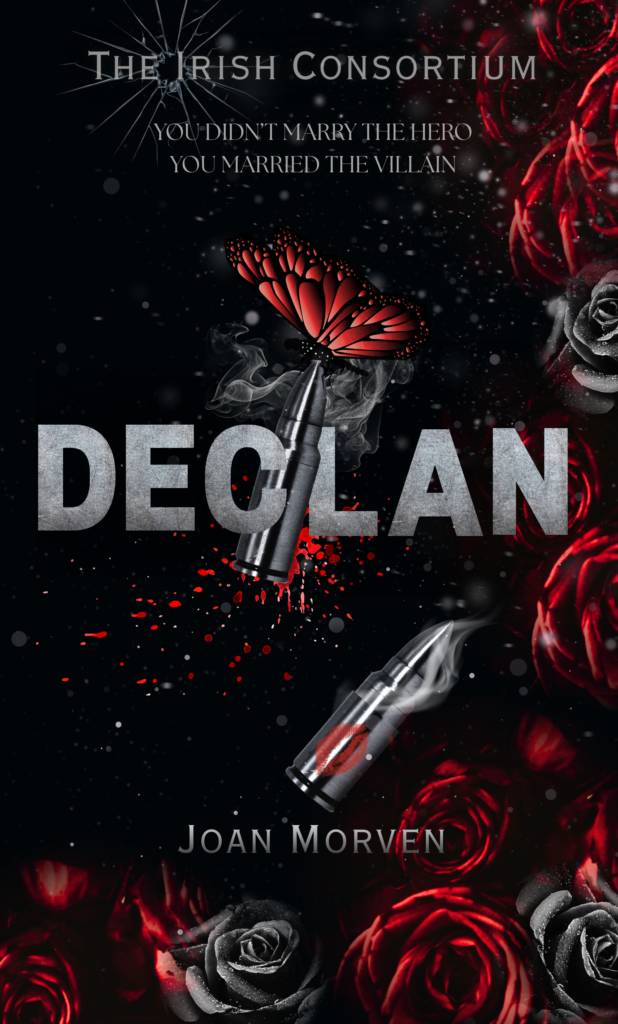
Viviana Morelli is the daughter her father never wanted at the table. When Declan Callaghan, head of the Irish Consortium, is offered his pick of the Morelli sisters in exchange for a stake in the family's docks, he passes over the two who were groomed for exactly this moment and chooses her instead: the one who spends the gathering ignoring the room, drinking alone at the bar. Married within the week, Viviana is dropped into a mansion full of guns, guards, and three brothers who run half the city's underworld, expected to play the compliant wife and doing nothing of the sort.
What starts as two people testing how far they can push each other turns into something neither wants to name, right as Viviana starts pulling at a thread in Declan's past that neither of them can afford to find. The marriage that was supposed to be a business transaction turns into the most dangerous thing either of them has ever signed up for, and the reason it was ever arranged in the first place is darker and more personal than either of them assumes going in.
Character Development
Declan. Declan lost his fiancée to an ambush years before Viviana ever walks into his life, and the book is upfront that the man who could love died with her. What’s left runs the Consortium on control: he picks Viviana specifically because she won’t play the submissive role his other options were bred for, and his instinct through most of the book is to own, track, and command his way through every problem, hers included. The more interesting version of him shows up in the smaller moments: breaking his own hand on a wall rather than lay one on her, going quiet with guilt the second he thinks she might be involved in something he can’t forgive, learning (slowly, and only after real damage) that keeping her safe by locking her in a room isn’t the same thing as keeping her.
Viviana. Viviana spends the book being underestimated by everyone in her orbit and correcting every single one of them. She picks locks, throws a punch that draws blood more than once, and kills when she has to without flinching afterward, but the book never lets that read as coldness: she’s also the one who stops to comfort a terrified new maid, who mourns a mother she lost young, who carries a specific, named trauma from a man before Declan that shapes exactly how she reacts to being controlled by another one. Her arc isn’t learning to submit. It’s deciding, deliberately, what she’s willing to give someone on her own terms after a lifetime of never being asked.
The power imbalance between them. This is the book’s actual engine, and it’s handled with more self-awareness than the premise promises. Declan genuinely does control nearly every condition of Viviana’s life for most of the book: her movement, her safety, even the terms of their sex life run through his say-so. But Viviana never stops pushing back against it, and the book is explicit that this is the point of tension rather than a problem it plans to smooth over: real intimacy has to survive an argument about who actually owns whom before either of them can trust it. The eventual answer, delivered in a scene where Declan burns the actual marriage contract, is that he has to hand real freedom back to her before anything between them means something.
Side characters. Kian is the sharpest of Declan’s brothers, the one who reads people (Viviana included) before anyone else catches up, and he’s the one who eventually calls her family in Irish rather than English, which lands harder than a lot of the book’s bigger declarations. Connor starts as the shy, easily flustered youngest brother and grows into Viviana’s real ally, the one who does the digging that proves her innocence and argues for her when his own brother won’t. Flynn Brady, Declan’s oldest friend and the Consortium’s likely next leader, gets set up across the book as its own person rather than a plot device, right down to a closing scene that clearly hands him the next installment. Silvana, Viviana’s half-sister, is the book’s most morally interesting side character: complicit in ways she didn’t fully understand and horrified once she does, given room to be genuinely conflicted rather than simply punished or forgiven. Carlos, Viviana’s childhood bodyguard, turns out to matter more than anyone assumes early on, and the reveal of exactly how is one of the book’s better-earned turns.
Themes
The book keeps circling one real question: what does it cost to actually choose someone, versus being handed to them. Viviana spends the whole book being traded, by her father, by circumstance, by a marriage contract she never agreed to, and her arc is about clawing back the difference between being taken and choosing to stay. Declan’s arc mirrors it from the other side: he took a wife the way he takes territory, and has to learn that keeping her isn’t the same skill as conquering her. Underneath both, the book is genuinely interested in blood versus chosen family: Viviana’s actual bloodline turns out to be a lie built on convenience, while the men who never had to love her (Connor, Kian, Carlos) are the ones who actually do. Vengeance runs alongside all of it as the family’s real operating system, formalized in a genuinely uncomfortable ritual near the end that the book doesn’t flinch from showing in full.
Writing Style and Effectiveness
Joan Morven alternates first-person present-tense chapters between Declan and Viviana, and the dual POV earns its keep: watching the same scene land differently in his head and hers is where the book’s best material lives, especially anywhere Viviana’s past collides with Declan’s possessiveness. The Irish slang (feck, eejit, eejits everywhere) gives the Callaghan brothers a real, specific voice, and the sibling banter between the three of them is genuinely funny in a way a lot of grimdark mafia romance doesn’t bother attempting.
The book’s biggest craft weakness is repetition. Declan calls Viviana “firecracker” so often it stops registering as a nickname and starts reading as a tic, several descriptive beats (his cock twitching, her body catching fire) recur almost word for word across chapters, and the sheer volume of explicit content, which runs through nearly every chapter, sometimes crowds out the plot’s own momentum rather than deepening it. A major reveal about who Viviana’s real father is lands right after a murder confession and gets resolved into relieved laughter within a page, which undercuts weight the book had just spent real effort earning. There are also visible copyediting gaps: dropped words, a couple of chapter-title typos, sentences that trail off mid-thought.
Conclusion
Declan is a genuinely fun, high-heat entry in the forced-marriage mafia romance shelf, carried almost entirely by its two leads and its very likable secondary cast. Its real strength is refusing to let Viviana become passive inside a premise that would let her: she stays armed, furious, and funny the entire way through, and the book earns the found-family warmth it builds around her precisely because it never once implies she needed rescuing to deserve it. Where it’s thinner: the central villain’s motivations stay fairly generic compared to the family-betrayal plot surrounding him, the sheer density of sex scenes occasionally flattens pacing that the mystery plot was doing real work to build, and a manuscript pass for repetition and typos would sharpen it considerably. Against the genre’s biggest names (the possessive-captor-turned-love-interest arc will feel familiar to anyone who’s read Carlton or Kent), Declan distinguishes itself with a heroine who fights on her own terms from page one and a brotherly cast with real chemistry, even where the prose around them could use another editing pass.
Evaluation
- Overall Rating: ★★★☆☆ (3/5)
- Writing Style: ★★☆☆☆ (2/5): heavy repetition (“firecracker,” recycled descriptive beats), a major reveal undercut by a joke a page later, visible copyediting gaps
- Characters: ★★★★☆ (4/5): Declan and Viviana both get real, earned arcs and the side cast (Kian, Connor, Flynn, Silvana, Carlos) is genuinely strong; the villain stays fairly generic
- World-Building: ★★★☆☆ (3/5): the Irish Consortium’s mafia structure functions but is sketched (docks, warehouses, three families) rather than deeply built
Trigger warnings: physical altercations, gun violence and weapons, death and murder, torture (both implied and explicit), kidnapping, threats of harm, explicit sexual scenes, discussions of sexual interest and manipulation, emotional manipulation, family betrayal, mafia/organized crime dynamics, corruption and illegal activities, grief over deceased loved ones, mentions of traumatic deaths, dominance and submission, themes of fear and paranoia, psychological manipulation, alcohol use, sexual assault (not committed by the male main character).
Recommended for readers who want a possessive mafia-boss romance where the heroine fights back instead of just enduring, anyone who likes their forced-marriage plots tangled up in a real family-betrayal mystery, and fans of H.D. Carlton or Danielle Lori who don’t mind a very high heat count and can forgive some repetitive phrasing for a genuinely warm, funny brotherly cast.