The Pythonist by Loren Little | Book Review
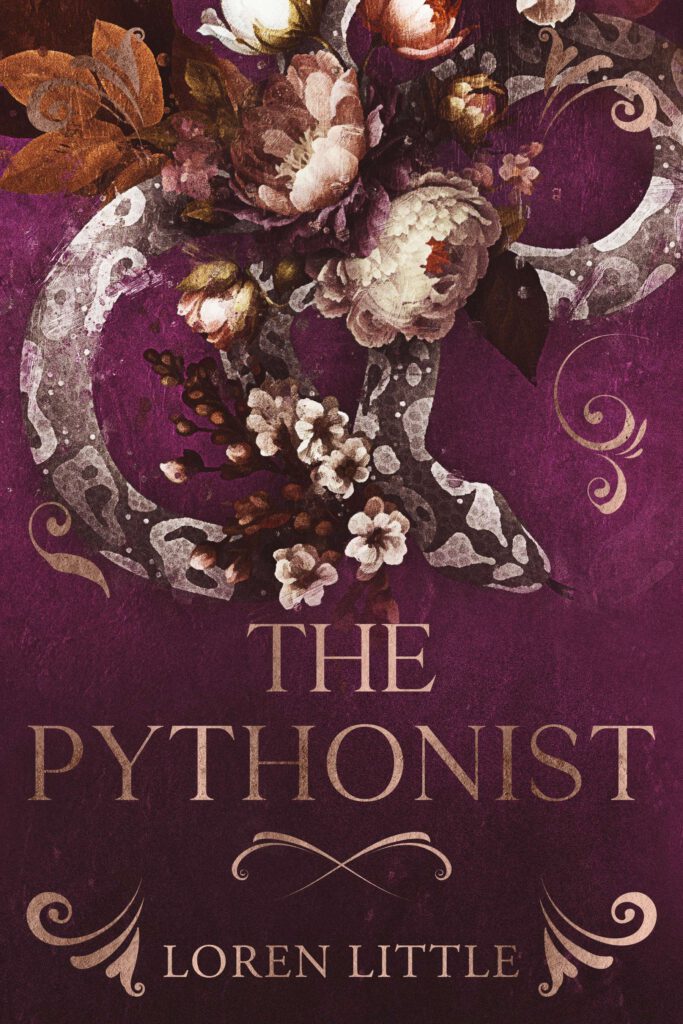
Sam Parkerson is the fixer sent to empty Kingsley Manor, and his orders are simple. Get the owner out, and if she won't go, burn the place down around her. The owner is Catty Kingsley, tied to the house by a bargain she made as a child and sharing it with twelve other women, and Sam's plan falls apart in about a chapter.
Plot Summary (spoiler-free)
Sam Parkerson has a bad week coming. His father’s company wants Kingsley Manor emptied, and Sam is the fixer who gets sent when a job needs to be done quietly. His orders are simple. Get the owner out. If she won’t go, burn the place down around her.
The owner is Catty Kingsley, twenty-five, formal as a Victorian widow, tied to the house by a bargain she made as a child. She shares it with twelve other women who have red-rimmed eyes and fall asleep at sunset like someone turned a tap. Catty has nightmares, and they tend to come true. Sam arrives with a plan and the plan falls apart in about a chapter. What’s left is a man who can’t make himself leave, a woman who hasn’t had a visitor in years, and a clock running down, because somebody with a much worse job description is also on his way.
I laughed in the first chapter and I was still laughing when the book got properly frightening, which I didn’t expect to work as well as it does. It’s split into two parts, The Moth and The Flame. It ends on a happy ending and not a cliffhanger, with a couple of small loose ends left lying around on purpose.
Character Development
Catty and Sam take turns telling it in first person, and they could not sound more different. Catty is “The Damned” in her chapters and she acts like it. She turns mirrors to the wall, remakes beds, and talks like she’s been rehearsing for a haunting her whole life. Under all that ritual she’s lonely in a way she doesn’t have a word for. She’s also guilty about something she thinks she should have stopped, and that guilt does most of the steering. What surprised me is how much she enjoys being chased. She isn’t passive about it. She knows exactly what she wants from Sam and she’s blunt about asking, including the things most heroines in this genre only hint at.
Sam is “The Dreamer” and he is a mess. Black belt, flask in the pocket, swears like a docker, and the competent fixer routine lasts roughly one scene with Catty. He’s also possessive, and the book doesn’t dress that up. He watches her from the forest at night, he takes decisions out of her hands, and at one point he puts her in the boot of a car. All of it is played as kink and fated obsession, and for the most part she’s right there with him, but I’d be lying if I said the power gap didn’t give me pause once or twice. His father holds the leash on him at the start, and Sam holds a version of the same leash on Catty later. I found that interesting. Whether you find it hot or uncomfortable depends a lot on you, and the book is upfront enough about it that you’ll know within a few chapters.
James is the Russian nursemaid who has stayed on in the manor, and he carries garden shears. Every scene he walks into gets funnier. Jordan, one of the twelve, is sharp and gets the most to do of the housemates. The cat, Tabatha, is blind in one eye and leaves gifts that are half snake, which tells you everything about the tone. The rest of the women are a clause each in my head, and honestly that’s the right amount. The book knows who it’s about.
What kept me hooked on the two leads is how badly they need each other and how little either of them says it straight. Catty hides behind formality. Sam hides behind jokes and a flask. For the first half, every serious conversation they have is a conversation about something else, a dinner, a bedsheet, a painted rock on the lawn. When one of them finally says the real thing plainly, it hits much harder than a speech would have. I was rooting for them well before they’d earned it, and I’ll admit I wanted to shake both of them at least twice.
Catty also changes more than Sam does. She starts out managing her life like a list of dangers and ends up making a choice that costs her something and isn’t about safety at all. Near the end the ritual stuff loosens its grip and she gets noticeably funnier. Sam’s growth is quieter. He stops treating people as jobs, which is a bigger shift than it sounds for a man whose father trained him to treat everything as a problem to be handled.
Themes
The one that sticks is inherited guilt. Catty carries something that was never hers to carry, and a large part of the book is about whether anyone can set that down, or whether the only way out is through it. It’s handled with more patience than I expected from a book this funny.
Obsession and love are sitting uncomfortably close to each other the whole way through. Sam’s devotion can look a lot like control, and Catty’s loneliness makes her easy to read as someone who would accept anything. The book keeps asking which is which, and I was glad it didn’t answer too quickly.
There’s also the old gothic question of what a house does to the people living in it. Kingsley Manor feels like another character, and the way the women organise their lives around its rules, the sheets, the sunset sleep, the doors that won’t open, says a lot about how families keep to their habits long after anyone remembers why. Grief runs under all of it, quietly. A few of the comic scenes sit right on top of the saddest ones, and I think that’s deliberate.
Fathers, and what they leave behind, show up on both sides of the story. Sam is shaped by a parent who sees him as a tool. Catty is shaped by a parent whose shadow fills the house. Neither of them chose the legacy they’re living in, and neither can walk away from it without help. That’s a lot for a romance to carry, and it mostly manages. It gives the love story something to push against, so it never feels like two people falling for each other in a vacuum.
Writing Style and Effectiveness
Sam’s chapters are loud, profane and quick, and Catty’s read like a Victorian ghost story, and the swap between the two is a pleasure. You never need the chapter heading to know who’s talking. The jokes land often and they land fast. A cuckoo clock, a dare gone wrong with painted rocks, porridge as a love language. I laughed out loud more than once, usually right before something went wrong.
The structure helps. The Moth is the slow, curious approach, with Sam circling the house and Catty circling him. The Flame is where everything catches. The shift between the two halves is clear without being heavy-handed, and the pacing picks up exactly when you start to wonder how long the book can keep the manor’s secrets. Chapters are short, which makes it dangerously easy to read another one.
The haunting itself is built well. Things creep, doors misbehave, the rocks multiply, and the dread gets under the comedy instead of fighting it. It reminded me of The Haunting of Hill House if Hill House had a better sense of humor and much worse boundaries.
Then there’s the swearing. In Sam’s head it’s constant and by the second half I’d stopped noticing it, which I think is the opposite of what it’s meant to do. The pet names repeat a lot too, “baby,” “Terror,” “good girl,” over and over. Both of them lean on the same few comparisons, the predator, the panther, the thing circling its prey. Catty’s voice loves “may the dark forces” a little too much. A long explanation near the end is delivered mostly in conversation, and it felt like the plot stopping to catch its breath. One reveal about who someone really is arrived a bit too neatly for me. I never stopped enjoying the ride, but I could feel the book working to tie things off.
The sex is frequent and explicit, with five full scenes and plenty of kissing between them. They involve choking, spanking, praise language, blood play, and a very carefully negotiated scene involving sleep. For readers who want the kink on the page, it’s there and it isn’t shy.
Conclusion
This is a fast, filthy, properly funny gothic romance with an actual haunting at its center. It does the thing I wish more books in this lane would do, which is take the spooky part seriously enough that the romance has something real to push against. Wednesday Addams fans will be right at home, and anybody who liked Crimson Peak for the house more than for the plot will too.
The weaker spots are real. The dialogue tags and pet names repeat, the swearing is relentless, and the ending leans on a convenient piece of luck and a long speech. The sheer volume of pet names like “baby” and “good girl” starts to blur, and a little trimming would have let the good lines stand out more. A few of the middle chapters also cover ground the book has already covered, and I felt the pace sag there for a stretch. Not for long, but enough to notice.
None of that stopped me from finishing it quickly and wanting the next book. I closed it feeling like I’d had a good time in a very strange house, and I’d go back.
Evaluation
Overall Rating: ★★★★☆ (4/5)
Writing Style: ★★★★☆ (4/5): two clearly different first-person voices and strong comic timing, held back by repeated pet names and a heavy swearing habit
Characters: ★★★★☆ (4/5): Catty and Sam are vivid and James is a joy, though Sam’s possessiveness will divide readers
World-Building: ★★★☆☆ (3/5): the manor and its rules are atmospheric and memorable, but the bargain behind it all is explained late and in a rush
Spice Rating: ★★★★☆ (4/5): five on-page scenes, explicit and kinky, with a clear consent thread running through the one that matters most
Recommended for readers who like their gothic romance funny and their haunted houses properly haunted, who enjoyed the eerie comedy of Wednesday and the Addams Family, and who don’t mind an alpha hero who watches from the treeline. Less of a fit if constant swearing wears you out or if possessive, controlling behavior is a hard no for you in a love interest.
Trigger warnings: explicit language, graphic sex scenes with taboo elements, inherited guilt, hauntings, death, violence, stalking, murder, obsession, violence against children, torture, parental suicide, animal death, gun violence, kidnapping, voyeurism, somnophilia, choking, blood play.