Shadow of the Moon by Domenica I. White | Book Review
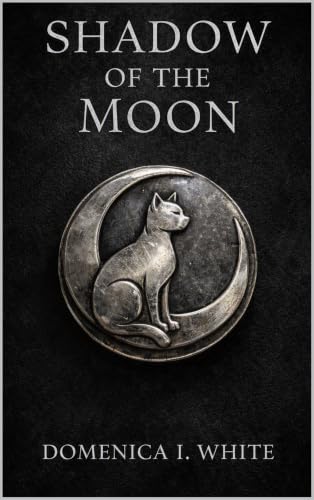
Nyx Luna is a catkin, a cat-shifter from a line of moon priestesses, and the last of her house. She grows up alone in the slums of the capital, finds a locked chest in an abandoned library at five, and from there climbs through the Adventurers' Guild and a war that puts her in command of an army.
Plot Summary (spoiler-free)
Nyx Luna is a catkin, a cat-shifter, and the last of House Luna, a family of moon priestesses that human slavers nearly erased before she was old enough to remember it. The prologue goes through that destruction and it’s rough. By its end she’s three years old and alone in a forest, with her family’s memories in her head and a priestess’s duties she shouldn’t know yet.
The rest of the book follows her up. She scavenges in the capital’s slums, finds a locked chest in an abandoned library, and joins the Adventurers’ Guild at twelve. She climbs the ranks much faster than anyone thinks is reasonable. Along the way she learns to hunt, brew, sew, enchant and cook. At fifteen the king’s draft sends her into a long war with the neighboring kingdom of Tark, and before long she’s the one giving the orders. The story runs from her toddler years to her early twenties, with a fated-mates romance coming in near the end.
I came for the moon-priestess lore and the way she sings the dead to rest, and that hooked me fast. The prologue is not for the faint-hearted, which makes the cozy turn after it more of a surprise than I expected. Then I stayed for the food. There’s so much of it that around the third roast chicken I went and made myself a snack.
Character Development
Nyx is kind in a practical way, and I liked her. She feeds people, buries the dead (the enemy’s too), and deals with fear and grief by making something for whoever is standing nearby. When she gets angry, I understood why. I also liked how she got so good at things. She studies, practices, and writes it all in a notebook, which suits a girl who grew up alone and learned early that skills are the one thing nobody can take from you.
My problem starts once she’s in charge. After that almost nothing costs her anything. She’s the best fighter, healer, brewer and planner in every room, and the people around her spend a lot of pages being astonished about it. The early chapters have real losses, and those are where I felt closest to her. Later, when something does rattle her, it’s over in a page or two and the next small miracle shows up. I kept wanting her to fail at one little thing.
What won me back were her silly weak spots. Catnip makes her talk until she’s mortified, fish gives her hives, and her tail gives away everything her face is hiding. She also makes her own medicine out of candy. Those small things did more for me than the big feats.
Her mother stays a presence long after the prologue. Nyx talks to her out loud when things go wrong, honors her in small rites, and saves the jerky her mother made for the very worst days. It’s a quiet thread, and I liked it more than most of the loud ones.
I couldn’t always tell the side cast apart. Bava, the tavern worker who keeps putting plates in front of Nyx, is her first real mother figure, and her scenes are small and good. Hen and Alec, her closest officers, bicker like brothers. The royal couple are a joy. The queen decides Nyx will be treated like a person and not a weapon, then enforces it with an energy close to military, and the king, who hates paperwork, loses every argument with his wife. I wanted another hundred pages of those two. Mallory, a shadow spirit who latches onto Nyx, brings a sulky streak that helps a lot. Most everyone else is there to be amazed by Nyx and say so.
The love interest is gentle and says most things through food, calm, and refusing to leave the room. It’s sweet. It also goes from nervous to settled in a hurry, and the mate bond ends up doing work that scenes between the two of them could have done. Nobody has to worry about a power imbalance in the usual direction here. If anything it runs the other way, since Nyx is far stronger than he is in any room they share.
Themes
Found family is the big one. A girl with nobody builds a family out of mercenaries, healers, tavern keepers and one very patient tanner, and by the end she’s feeding thousands. I’m a sucker for that, and the quiet moments land, a meal shared, a stranger who stays.
Food carries a lot of the feeling, too. Nobody here says “I care about you” when they can set a plate in front of someone instead. Once I started reading every meal as a small act of love, the endless menus got easier to forgive.
Another thread is what it costs to be useful. Nyx is handed huge responsibility as a child and treats it as normal, and the people around her keep pointing out that it isn’t. The royal decree that she has to start acting her age is silly and sweet and also the whole point. I wish she’d been given more room to feel that herself instead of being told.
There’s also a question about power. Nyx can do almost anything, and she worries, rightly, about what that makes her. I noticed how often she picks mercy when cruelty would be easier, and that told me more about her than the sword fights did. I wanted her worry to push harder before it got settled. Tied to it is inheritance. She carries her mother’s memories and her house’s history, and part of the story is whether she can set that weight down once she’s honored it. That stretch is warm and dark at once, and it got a real reaction out of me.
Writing Style and Effectiveness
Nyx’s first-person, past-tense voice runs long, warm and full. Paragraphs are walls and sentences stack three or four clauses deep. Everything gets described, from what she’s eating to how the room smells to what her tail thinks about it. That gives the book comfort and texture. It also gives it repetition. The same cadences keep coming round, the “not this, just that” shape most of all, along with tails that “betray” her, souls that “leave her body,” and the same joke about someone blurting a secret and wishing they hadn’t. By the fourth time a scene ended that way, I could see it coming from the page before.
The point of view hops. The prologue is third person. After that, sections headed with a character’s name swap between first and third, sometimes a couple of pages apart. A few of those interludes work well, and several feel like head-hopping in a story that mostly needs Nyx. The child chapters are the hardest part for me. A five-year-old Nyx tells her story in a calm adult voice with a huge vocabulary, and her feelings are mostly described instead of felt. I believed the survival details. I didn’t believe the child.
The fight scenes are easy to follow. You always know where everyone is standing and what Nyx is thinking, which I appreciated after some romantasy battles that turn into fog.
Dialogue reads well. Short exchanges between Nyx and the king, or between Hen and Alec, move fast and have real comic timing, even when the prose around them drags.
The long food and inventory passages are a matter of taste. The first few times they made me hungry and made Nyx feel real. After a while they read like padding, especially in the interludes where the plot is waiting. The tone swings, too. The prologue and the war chapters are grim, and elsewhere the story has long comic set pieces built on misunderstandings and gossip. I enjoyed those scenes, but jumping between the two moods is whiplash, and a couple of times I needed a minute to switch gears.
There are plenty of typos and spacing glitches, odd gaps, missing words, the word “kuln” with a stray space after it. It’s an ARC, so I’m assuming a proofread is coming and I won’t weigh it much. You’ll still notice. The pacing is uneven. The first third is a slow build of survival and tinkering, the war section moves best when Nyx is cooking, healing and shielding, and the later chapters lean heavily on comedy. The magic is fun but stretchy, and when Nyx needs a solution she tends to already have one.
Conclusion
Shadow of the Moon is a gentle, funny, very big hug of a fantasy. Think Legends & Lattes, but with an overpowered heroine and a war. That comparison also shows the gap. Legends & Lattes keeps its stakes small on purpose, and this book starts with a catastrophe and then keeps handing Nyx wins until the stakes go soft. I rooted for her anyway. I laughed out loud more than once, mostly at the king and queen, and I would follow those two into any sequel.
The style leans on a handful of tricks, the middle and end run longer than the story needs, and the romance arrives late and fast. Some of the world is more interesting than the text gives it credit for, like the shadow spirits that trail her around. Because it ends like a finished story, the “Book 1” label surprised me, and I’m curious what the rest of the series plans to do. I want to read a tighter version. If you read for comfort, the comfort is there in bulk, and some days that is exactly what a reader wants. I finished it fond of the book and a little tired of it at the same time.
Evaluation
Overall Rating: ★★★☆☆ (3/5)
Writing Style: ★★☆☆☆ (2/5): warm, detailed and often charming, but long-winded, repetitive in its jokes and cadences, inconsistent in point of view, and full of run-on paragraphs and typos
Characters: ★★★☆☆ (3/5): Nyx is lovable and the king and queen are wonderful, but she’s rarely challenged once she rises and the supporting cast mostly exists to admire her
World-Building: ★★★☆☆ (3/5): a rich setup with catkin lore, guild ranks and shadow spirits, held back by magic that bends to fit the plot
Spice Rating: ★☆☆☆☆ (1/5): a few kisses and one short love scene that fades quickly, plus sexual violence referenced in the prologue and backstory without on-page detail
Recommended for readers who want a cozy fantasy with a lot of food and a very kind, very overpowered heroine, who like ensemble casts and found family, and who don’t mind a long book. If you liked the warmth of Legends & Lattes and the “she’s secretly the strongest” energy of progression fantasy, this blends the two. Less of a fit if you want real stakes, a slow-burn romance with heat, or a lean, polished prose style.
Trigger warnings: None listed.