The Hourglass Keeper by M.L. Burns | Book Review
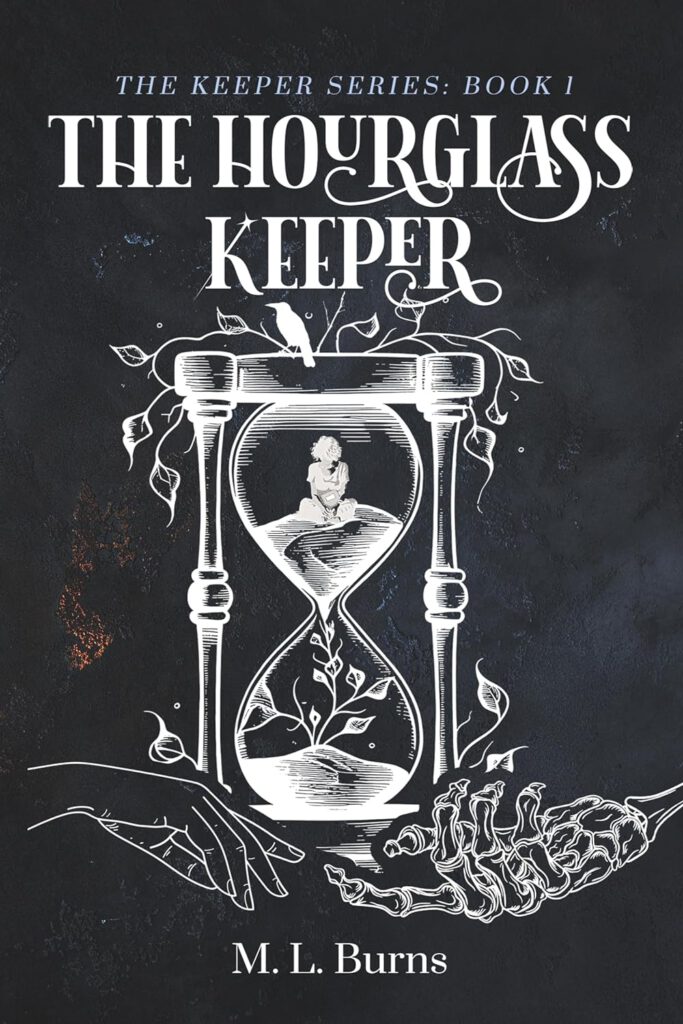
The Hourglass Keeper opens The Keeper Series with a tale of survival at any cost. Azahara must cross a world overrun by dark forces, travelling with a small band of allies and a set of ancient artifacts, chief among them a mythical hourglass said to be able to tip the scales of time itself. Alongside her are the skilled warrior Kaed and her younger sisters, Skyy and Mel, and their route runs from abandoned temples to open battlefields, each stop peeling back another layer of the danger they are in. Azahara carries the trauma of her past the whole way, and the book is as much about what she will sacrifice to protect the people she loves as it is about the quest.
Plot Summary (spoiler-free)
The Hourglass Keeper opens the series with a story of survival at any cost. Azahara has to cross a world overrun by dark forces, and she does it with a small group of allies and a set of ancient artifacts. Chief among them is a mythical hourglass, said to be able to tip the scales of time itself, and the pull of that kind of power is a problem as much as a tool.
Travelling with her are the skilled warrior Kaed and her younger sisters, Skyy and Mel. Their route runs from abandoned temples to open battlefields, and every stop peels back another layer of the danger they are in, mystical and mortal both. Azahara is carrying the trauma of her past the whole way, and the book is as much about what she is willing to sacrifice to protect the people she loves as it is about the quest.
Character Development
Azahara is a carefully drawn lead, brave but bent by what she has been through. Her arc runs on internal conflict, her fear set against her determination to keep her people safe, and the psychological layer to that pulls real weight in her decisions. Her attachments, especially to Skyy and to Kaed, ground her, and her growing feelings for Kaed open up her deeper vulnerabilities.
Skyy is strong-willed and Mel is still innocent, and the friction between the sisters puts real tension in the family dynamic. Skyy’s curiosity is dangerous, and it drives several of the book’s key turns. Kaed is a powerful warrior Azahara trusts deeply, and while some of his motivations stay deliberately shrouded, there is a clear quiet commitment underneath, and his choices in battle show a man fighting his own demons alongside his sense of duty. Broan and the mysterious Illyan round out the group, adding depth and complicating the trust Azahara places in people by carrying secrets and unresolved history of their own.
Themes
The book keeps asking how power, especially magical and mythical power, sits against morality. The hourglass is a symbol of control over time, and it tempts the characters while exposing their limits. Survival is the other engine, and the book keeps pressing the question of what it costs, weighing personal loss against the greater good in both physical and emotional terms. Underneath all of it is family: the bonds between Azahara, Skyy, and Mel are what drive the plot, and sibling loyalty gets tested hard by life-or-death stakes in a story that is also about forgiveness and trust.
Writing Style and Effectiveness
M.L. Burns writes flowing, descriptive prose and builds the world with a lot of texture. The narration shifts between high action and reflective moments, balancing plot and introspection, and it mostly runs in a broad third person that occasionally slips into Azahara’s first-person thoughts to pull the reader closer to her struggles. The main craft weakness is length: some passages get wordy enough that the pace sags, particularly in the longer descriptive stretches.
Conclusion
The Hourglass Keeper builds an intriguing fantasy world carried by complex characters and their moral dilemmas. Burns balances action against emotional conflict well, and the relationships generate the tension that pushes the story forward. The pacing stumbles in places, mostly on over-long description, but the themes of family, loyalty, and resilience come through strongly. Readers who liked the thematic weight of Leigh Bardugo’s Grisha trilogy, and who want fantasy built around detailed character relationships and questions of power and sacrifice, are the audience.
Evaluation
- Overall Rating: ★★★★★ (5/5)
- Writing Style: ★★★☆☆ (3/5): rich description that sometimes runs long enough to slow the pace.
- Characters: ★★★★☆ (4/5)
- World-Building: ★★★★☆ (4/5)
- Spice Rating: ★★☆☆☆ (2/5): the romance is a slow build and stays mostly in the background of a fantasy-forward book.
Trigger warnings: violence and battle, trauma and its aftermath, peril to family members, grief, a power imbalance.
Recommendation: for readers who like fantasy worlds built around detailed character relationships, family loyalty, resilience, and moral dilemmas about power. Fans of Leigh Bardugo who do not mind a slower, more descriptive read will find a lot here.