The Dragon’s Keeper by M.L. Burns | Book Review
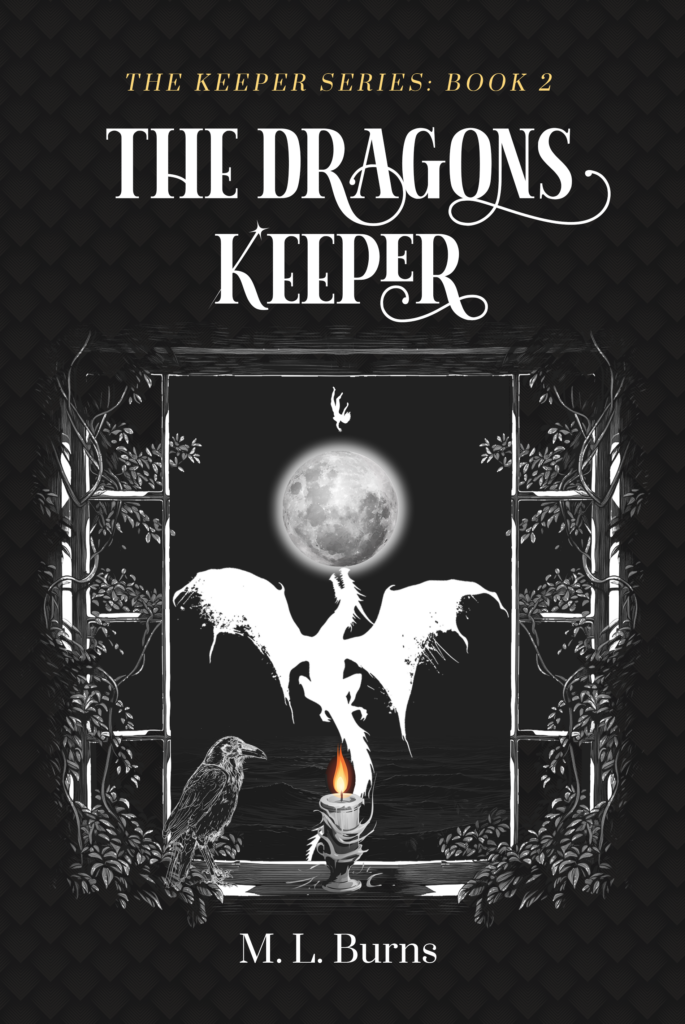
In the aftermath of the cataclysmic Battle of Sunfall, Azahara's world crumbles, leaving her with nothing but time on her side. She sets forth on a journey to the Isle of Ilkiz. Once home to the mighty Ilkiz herself and the Power of Dragons, the Isle becomes her sought-after refuge and the crucible for her fate, where every step forward teeters on the precipice of triumph or ruinous loss. With the mortal King, the Fae, and the Gods on her back, she struggles to see the light beyond the twilight. All she has ever yearned for is to be safe and happy. Yet in the vast expanse of the sea she traverses, that dream seems an unattainable illusion.
Plot Summary (spoiler-free)
The Dragon’s Keeper follows Azahara through a stormy stretch of her story, still bound up in trauma and in power she does not fully control. Her past is full of violence, betrayal, and questions about who she actually is, and the present keeps forcing her into tricky negotiations with powerful beings: the Fae, dragons, and gods. She is up against Goddrick, and she is caught between revenge and redemption, pulled hard in both directions.
Every encounter pushes her a little closer to understanding what her power is and what it is going to cost her. It is a rough emotional ride, built around the price of power and of love in a world that gives no quarter, and it deepens the series’ central threads rather than resolving them.
Character Development
The whole book centres on Azahara, and her character gets more developed here. She is fighting a personal battle shaped by past abuse and by her responsibility to the people she loves, and she is motivated by the need to survive, to hold onto herself, and by a desire for revenge. Her psychological strength is rooted in the trauma she has been through, which also knocks her off balance at times, and the book does not pretend that is a clean or linear thing.
Jayce is strong and loyal, protector and partner both, and his scenes with Azahara are where she finds solace and some emotional security in the chaos. His protectiveness runs all the way to vengeance, which shows him as both kind and fierce. Goddrick is cruel and never merciful, and everything he does to Azahara is meant to remind her of her own danger and keep her down, which drags her darker memories back to the surface and adds real weight to the tension. Ilkiz, Kaed, and Xol each complicate the relationship map, some of them wavering in their loyalties, and each of those bonds keeps shaping Azahara’s world and pulling her between love and revenge.
Themes
The aftermath of trauma is worked through in close detail, with Azahara’s psychological turmoil rendered through flashbacks and internal struggle as she tries to reclaim herself from remembered pain. Power runs through the book, particularly in the unequal relationships Azahara is forced into with people who want to control or hurt her, Goddrick chief among them, and the story keeps circling questions of control, autonomy, and what resilience actually costs. Love and the sacrifices it demands press against her hard-won independence and her need to fight her own battles on her own terms.
Writing Style and Effectiveness
M.L. Burns’s style is dense and evocative, full of billowing description that puts you inside Azahara’s world. The pacing swings between taut confrontation scenes and a looser, more reflective register. The first-person point of view gives a deep view into Azahara’s mind, which supports the emotional weight the book is carrying. The language is at its strongest in moments of pain or vulnerability, though the sheer level of detail in her inner world and her trauma can slow the read down in places.
Conclusion
The Dragon’s Keeper is a darkly psychological novel about resilience, loyalty, and power, and Burns writes the mind of a traumatised protagonist with real skill, holding her fragile and formidable sides together. The content is heavy and not for everyone, but the book offers a perspective on survival and identity that is less common in the genre. It leans further into deep fantasy than a lot of its peers, and the raw handling of trauma and character growth is what sets the series apart. Readers who enjoy dark fantasy with deep character work and heavy psychological turmoil, in the vein of Sarah J. Maas or Leigh Bardugo, are the audience.
Evaluation
- Overall Rating: ★★★★★ (5/5)
- Writing Style: ★★★★☆ (4/5)
- Characters: ★★★★★ (5/5)
- World-Building: ★★★☆☆ (3/5)
- Spice Rating: ★★★☆☆ (3/5): on-page intimacy, though the book’s focus is trauma and power more than heat.
Trigger warnings: physical and sexual abuse, violence, torture, traumatic memories and flashbacks, a heavy power imbalance.
Recommendation: for readers who want dark fantasy with deep character work, a heavily psychological storyline, and morally complicated characters, and who can handle serious content. Fans of Sarah J. Maas or Leigh Bardugo who do not mind a heavier, more interior read.